
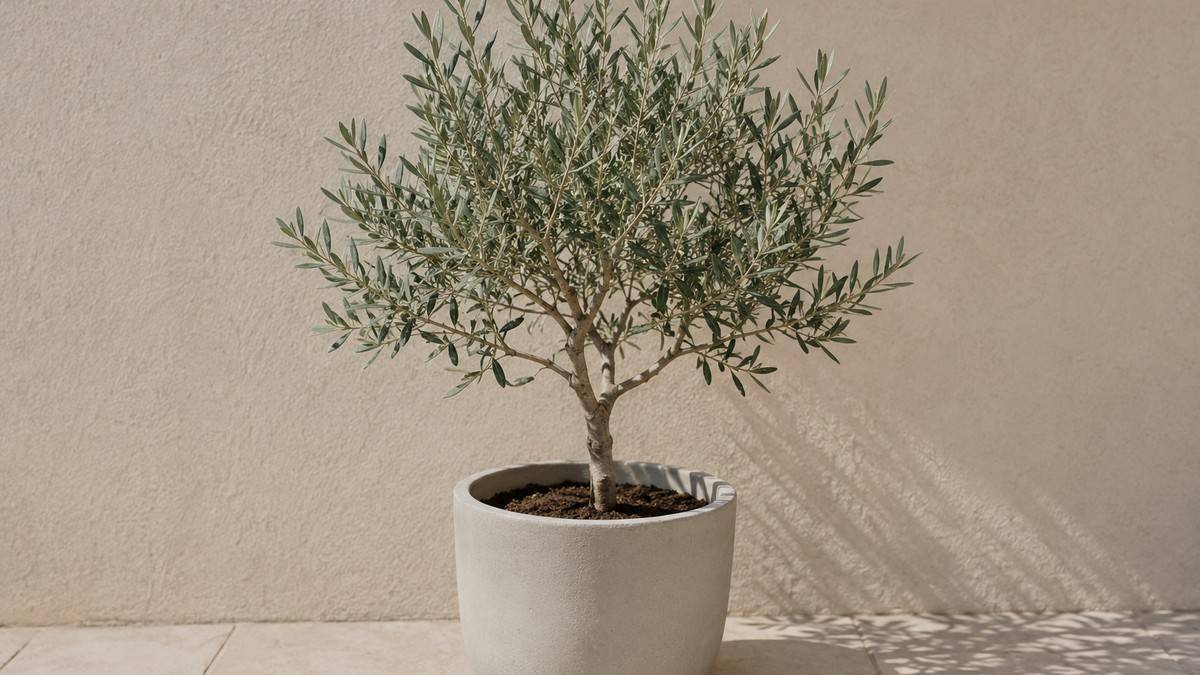
The olive tree is one of the most elegant outdoor trees, known for its timeless beauty and calm natural appearance. It features green-silver leaves, a graceful woody trunk, and a strong presence that suits gardens, entrances, patios, and outdoor spaces.
The olive tree is more than just an ornamental tree. It represents authenticity, warmth, and natural elegance. Adding it to a home or garden gives the space a Mediterranean-inspired feel, making it suitable for both luxurious and minimal outdoor designs.
Benefits of the Olive Tree
The olive tree is known for its durability and ability to adapt to outdoor conditions, especially in sunny and dry areas. Its elegant shape makes it ideal for entrances, courtyards, gardens, terraces, and spacious balconies.
One of its main advantages is that it adds height and visual balance to the space, especially when placed in a stylish outdoor pot or beside an outdoor seating area.
Best Location for an Olive Tree
Olive trees prefer locations that receive direct sunlight for several hours a day. It is best to place them in open outdoor areas such as gardens, entrances, rooftops, patios, or sunny balconies.
The more sunlight the tree receives, the stronger and healthier its growth will be. Fully shaded areas are not ideal, as olive trees need sunlight to maintain their strength and beautiful appearance.
How to Water an Olive Tree
The olive tree needs moderate and regular watering, while avoiding overwatering. It is best to allow the soil to dry partially before watering again, as too much water may weaken the roots or cause root problems.
During summer, the tree may need more frequent watering due to high temperatures. In cooler weather, its water needs are usually lower. The most important step is to check the soil before watering; if it is still moist, it is better to wait.
Suitable Soil
The best soil for olive trees is well-draining soil that does not hold excess water around the roots. The tree can be planted directly in the ground or in an outdoor pot, as long as the pot has proper drainage holes.
Good drainage is one of the most important factors for keeping an olive tree healthy, because standing water around the roots can affect the tree over time.
Care and Pruning
Olive trees need light pruning from time to time to maintain their shape and neat appearance. Dry or weak branches can be removed, and extra growth can be trimmed depending on the desired shape.
Pruning helps the tree look cleaner and allows better airflow between the branches.
Using Olive Trees in Outdoor Styling
Olive trees are commonly used in luxurious outdoor designs, especially when paired with pots in white, grey, beige, or matte black. They look beautiful beside outdoor seating areas, stone pathways, wide entrances, and modern outdoor spaces.
They can also be styled with other outdoor plants such as lavender, rosemary, cacti, or soft-colored plants to create a natural and balanced look.
Is the Olive Tree Suitable for Hot Weather?
Yes, the olive tree is suitable for sunny and dry climates. It can tolerate heat well when planted in suitable soil and watered moderately without overwatering. This makes it an excellent choice for outdoor gardens, entrances, and patios in warm regions.
Conclusion
The olive tree is a great choice for anyone looking for an outdoor plant that combines elegance, durability, and natural beauty. It adds a refined presence to the space and works beautifully in gardens, entrances, and outdoor seating areas.
With enough sunlight, well-draining soil, and moderate watering, the olive tree can remain beautiful and healthy for many years.