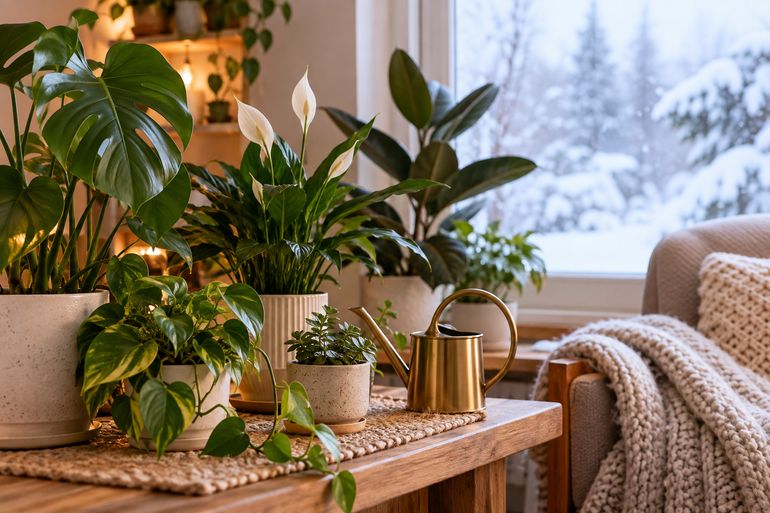
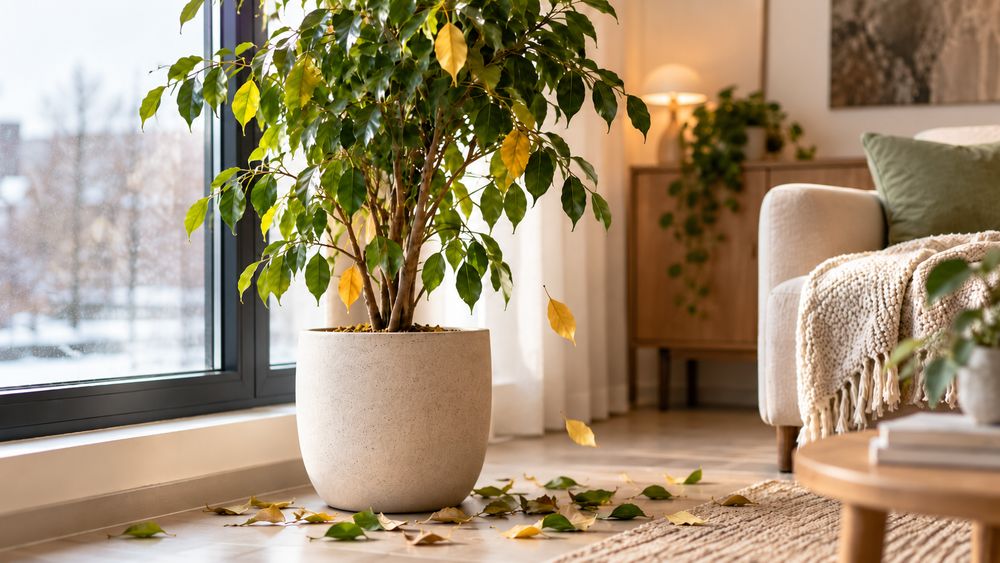
During winter, you may notice that some of your indoor plants begin losing leaves or developing yellow and brown foliage, even when you continue caring for them as usual.
Leaf drop is a common issue during colder months and can be linked to changes in light, temperature, humidity, and watering needs.
In this guide from Muhrah Gardens, we explore the most common causes of winter leaf drop and practical ways to keep your indoor plants healthy.
1. Reduced Natural Light
Winter brings shorter days and lower natural light levels. Some indoor plants may struggle to maintain healthy growth when they receive less light than usual.
Solution: Move your plants to a brighter location suited to their specific light requirements. Avoid intense direct sunlight for plants that prefer indirect light.
2. Overwatering
Many houseplants grow more slowly during winter and may use less water. Continuing the same watering routine as summer can leave the soil wet for too long, potentially damaging the roots.
Solution: Check soil moisture before watering, adjust your watering frequency to the plant's needs, and ensure proper drainage.
3. Cold Drafts and Temperature Changes
Sudden temperature changes and cold air from windows or doors can stress indoor plants, particularly tropical varieties.
Solution: Keep plants away from cold drafts, chilly windows, and areas with frequent temperature fluctuations.
4. Dry Air from Indoor Heating
Heating systems can reduce indoor humidity, leading to dry leaf edges, browning, and premature leaf drop in humidity-sensitive plants.
Solution: Keep plants away from direct heat sources. Consider using a humidifier when needed and grouping plants with similar care requirements.
5. Sudden Changes in Location
Moving a plant to a new location with different light and temperature conditions can cause temporary leaf loss.
Plants such as Ficus benjamina can be particularly sensitive to sudden environmental changes.
Solution: Avoid frequent relocation and introduce major environmental changes gradually.
6. Natural Aging of Leaves
Some leaf drop is completely natural. Older lower leaves may turn yellow and fall as plants continue to develop.
However, excessive or sudden leaf loss may indicate a problem that needs attention.
How to Identify the Cause of Leaf Drop
Look for the following signs:
- Yellow leaves and consistently wet soil: Possible overwatering or poor drainage.
- Crispy leaves and very dry soil: Possible underwatering.
- Brown, dry leaf tips: Possible low humidity or other environmental stress.
- Sudden leaf drop after relocation: Possible environmental shock.
- Leaf drop with visible pests: Possible insect infestation.
These signs are clues rather than definitive diagnoses, so always consider the plant's overall condition.
How to Prevent Leaf Drop During Winter
Follow these simple tips to help your indoor plants stay healthy:
- Check soil moisture before watering.
- Provide appropriate natural light.
- Protect plants from cold drafts and direct heating.
- Maintain suitable humidity levels.
- Avoid excessive fertilizing when growth slows.
- Inspect leaves regularly for pests.
- Remove dead leaves and keep foliage clean.
Can Indoor Plants Recover After Losing Their Leaves?
Yes. Many indoor plants can recover after losing some foliage, provided their roots and stems remain healthy and the underlying problem is corrected.
Recovery may take longer during winter because growth is often slower.
If severe leaf drop occurs alongside soft stems or an unpleasant smell from the soil, inspect the root system for possible rot.
Should You Water More When Leaves Start Falling?
Not necessarily. Both overwatering and underwatering can contribute to leaf loss.
Always check the soil and identify the likely cause before changing your watering routine.
Conclusion
Winter leaf drop does not always mean your indoor plant is unhealthy. It may result from reduced light, overwatering, dry indoor air, cold drafts, or natural leaf aging.
By understanding each plant's individual needs and maintaining stable growing conditions, you can help reduce leaf loss and encourage healthy growth.
At Muhrah Gardens, we believe that proper plant care starts with understanding the needs of every plant.
Explore our collection of beautiful indoor plants and bring a refreshing green touch to your home or office.